.png)
The Geotag Dilemma: Is Instagram Killing the BC Back-Country?
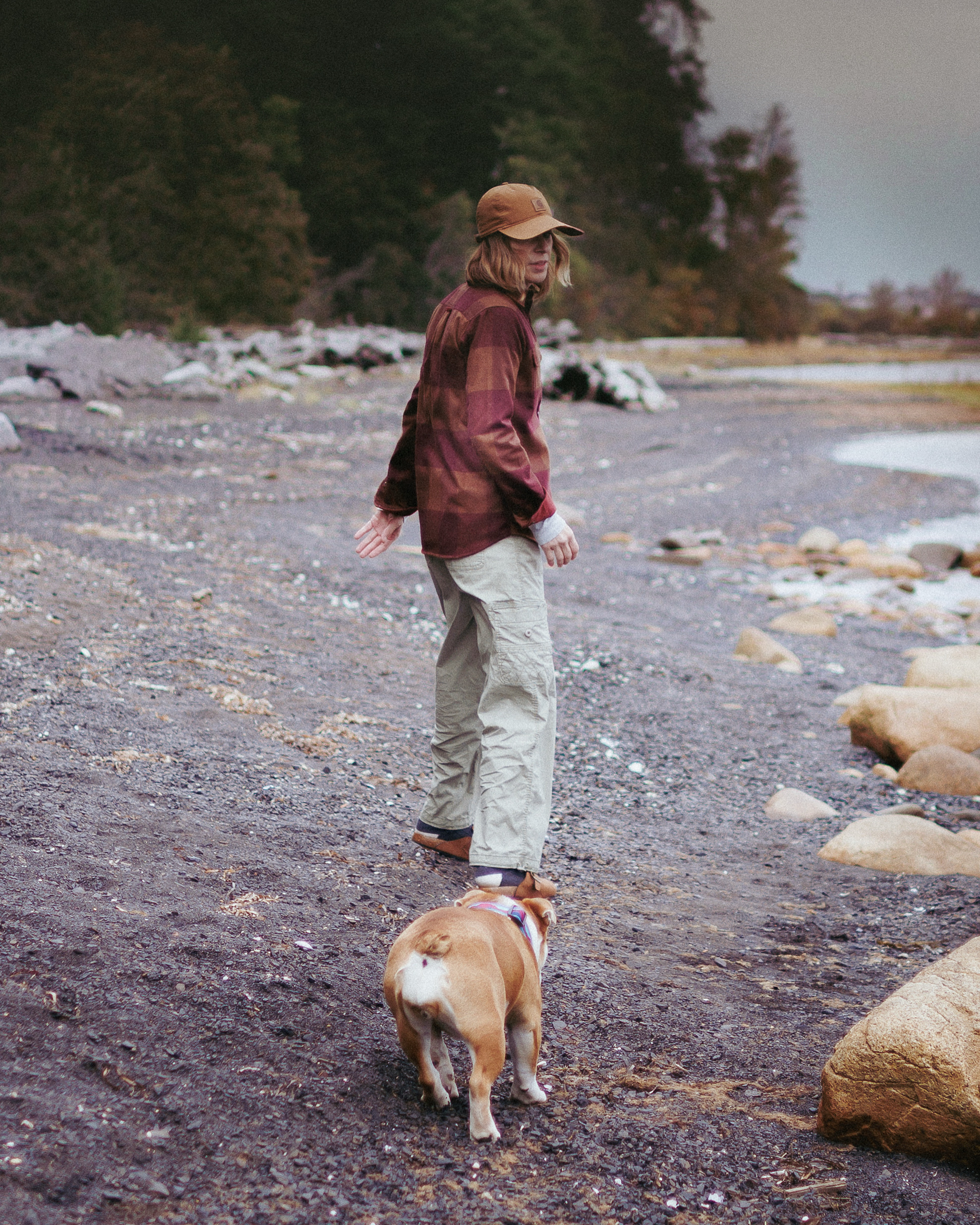
There was a time when some of the most beautiful places in British Columbia were so hard to find that if you were lucky enough a friend or family member would draw a map or better yet, take you there to experience the beauty together. But, those days are long gone.

When the pandemic became a reality, many of us headed outdoors, naturally. As the world retreated behind screens, we saw a desperate hunger for connection. Social media became the new map to fast track finding beautiful spaces in nature. Almost overnight, quiet trails and remote pullouts became stages for content production.The beauty of the BC back-country was traded for the transactional roar of "likes" and shares.
We have to ask ourselves: Are we actually connecting with the land, or are we consuming and commodifying it until there is nothing left to share?
The view has shifted. I regularly see beautiful spaces that were once pristine now overrun with parked vehicles, trampled and destroyed vegetation, and the telltale litter of a crowd that does not know the rules of the woods. Places labelled out of bounds or roped off for rehabilitation are completely ignored, the physical barriers no match for the glory of a viral post.
We are caught in a Geotag Dilemma: the desire for everyone to experience the beauty of nature and the physical reality that these spaces cannot withstand the demand. We have to ask ourselves: Are we actually connecting with the land, or are we consuming and commodifying it until there is nothing left to share?
The Managed Wilderness: A New Era of Access
To find a balance, we have to move past the idea that "access" means "everyone, everywhere, all at once."
The Rise of the Digital Permit
Both BC Parks and Parks Canada have leaned heavily into reservation systems to save popular spots from ecological collapse.
BC’s Day-Use Passes: In 2026, the pass system has expanded. Places like Joffre Lakes, Golden Ears, and parts of Garibaldi now require booking days in advance.
The "Lake Louise" Model: In Alberta, the 2026 Visitor Use Management Plan for Lake Louise prioritizes transit-only access and strict capacity limits based on "people per square meter" to ensure the alpine tundra is not pulverized.
The Dilemma: Does this solve the problem, or does it just push the "Insta-crowd" further into unmanaged, fragile back-country areas that do not have the infrastructure to handle them?

★ Infrastructure as Protection
True balance isn't just about saying "no"; it is about "hardening" the landscape.
Hardened Trails: Building boardwalks and raised paths (like those in Pacific Rim National Park) allows for high foot traffic without destroying the soil.
The Funding Gap: On the logging roads we drive, the issue is often a lack of basic facilities. If a spot goes viral, it needs a pit toilet and a bear-proof bin within weeks, not years. We need to advocate for a management style that moves at the speed of the internet.
★ Indigenous-Led Stewardship
A vital part of the 2026 landscape is the shift toward co-management.
Indigenous Protected and Conserved Areas (IPCAs): Areas like the K'ih tsaa? dze Tribal Park on the BC-Alberta border use Traditional Ecological Knowledge (TEK) to determine access.
The Guardian Program: Having Indigenous Guardians on the land acts as a physical deterrent to the "rope-hoppers." It shifts the tone from police enforcement to cultural stewardship. When a Guardian explains why a meadow is closed, it carries a weight that a plastic sign never will.
★ Education Over Shaming
Instead of shaming the "new hiker" who found a spot on TikTok, the balance lies in digital literacy
The Geotag Shift: The "new" etiquette is not about hiding locations to be elitist, but about protecting them. By tagging a general region rather than precise coordinates, we protect fragile spots from a viral load they cannot handle.
Captioning for Conservation: If you are going to share the photo, you have a "digital tax" to pay. You must share the Leave No Trace (LNT) rules, the safety warnings, and the reality of the logging road conditions.
Leaving a Legacy, Not a Footprint in the BC Back-Country
Our relationship with the back-country is at a crossroads. When we broadcast a fragile locations to thousands, we are not just sharing a view; we are deciding the future of that landscape. While I personally seek out spaces that are void of people, I realize that I don't have ownership over nature.
We must move past the digital ego that demands proof of our experiences. True connection with the land requires us to be present, not just performative. By choosing to hold space, by keeping coordinates off the grid, and by advocating for the physical protection of our trails, we ensure that these places remain sanctuaries for the next generation, rather than casualties of our current obsession.
Some secrets are worth keeping, and the wildest places are the ones that remain, quite literally, off the map.

Comments